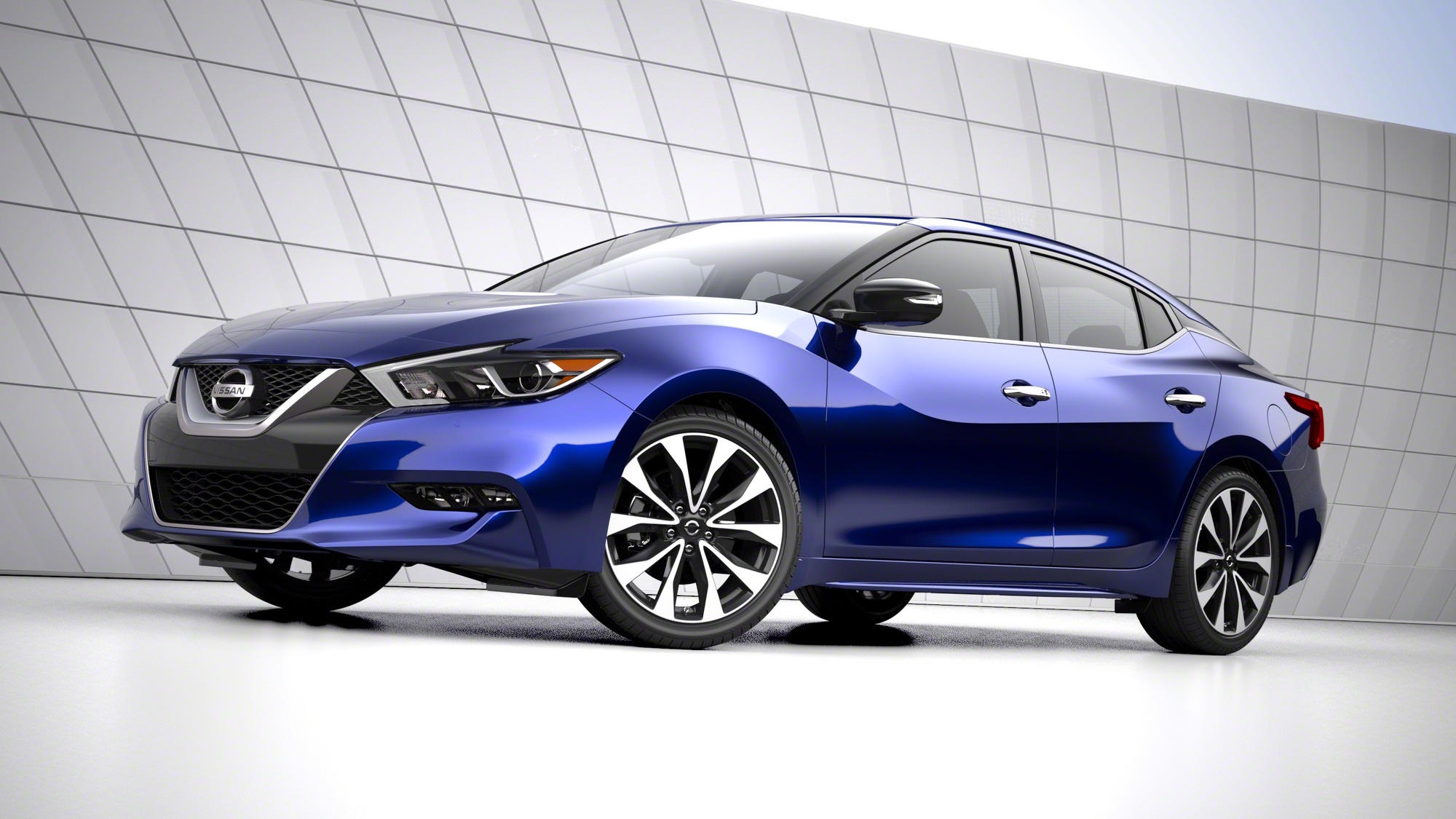
Nissan is used to making bold moves. Why, just one look at all the adventurous designs peppering the company’s lineup of vehicles is enough to notice that Nissan isn’t your average car company. That desire to break free from boring is what makes Nissan so special. At the 2015 New York Auto Show, Nissan showed off another special vehicle—the all-new 2016 Nissan Maxima.
Despite teasing us during the 2015 Super Bowl, the 2016 Maxima’s debut in the Big Apple provided a lot of solid details surrounding the new model. Most notably, it will feature a revised 3.5-liter V6 engine that’s mated to a continuously variably transmission. Unlike the current model, however, the new Maxima will boost horsepower to 300, up from 290.
Friday, May 22, 2015
Tuesday, May 19, 2015
Nissan Sway Concept: A Glimpse at What's to Come?
Oh how we love concept cars! Not only do they typically possess a wealth of future tech and styling, but they often provide the public with a glimpse into the future, be it a design element or even a future model. Which brings us to Nissan’s latest concept car, the Sway.
Recently debuting at the 2015 Geneva Motor Show, the Nissan Sway Concept is a sneak peek at what future-generation compact Nissan models might look like if the company’s striking new design language was applied to a European hatchback.
Thursday, April 30, 2015
Teen Car Insurance Tips from Sheehy Nissan of Mechanicsville
All drivers need car insurance. For many young drivers,
however, the cost of insurance costs more than their car. Parents handle teen
drivers differently, depending on their values. Some parents will pay for car
insurance for their teens, while some teens must buy their own insurance.
Regardless of family arrangements, the following tips from Sheehy Nissan
of Mechanicsville for
buying teen car insurance can help.
Explain insurance
Parents should spend time explaining insurance to their
teenage drivers. Important information parents should emphasize includes:
- Why
car insurance for teens costs so much. More teenagers die in motor vehicle
accidents in the U.S. than from any other cause.
- How a
ticket costs far more than a fine. Teens must know that a single ticket
can cost thousands of dollars in the form of higher insurance premiums.
- Common
reasons for accidents involving teen drivers. Speed, distracted driving,
and alcohol all contribute to teen auto wrecks.
- Teen
driver safety tips. Teens should always use their seatbelts. Also, teens
should stay off the roads between midnight and 4 a.m.
- Strict
household driving rules. Parents must insist on teen-driver
accountability. Teens that repeatedly drive too fast and demonstrate other
unsafe driving habits should lose their driving privileges until they
complete additional training.
Mandatory insurance
Drivers do not choose whether to buy car insurance—states
require drivers to carry a minimum amount of liability insurance before they
can take a car onto the road. Banks and finance companies usually require car
buyers to have collision and comprehensive coverage on financed vehicles.
Teen drivers must understand why they need insurance.
Insurers insist that insurance policies list all licensed drivers in a
household. Parents may choose to add their teen driver to their existing policy
if the teen does not buy separate insurance.
Affordable car insurance
The term “affordable” rarely describes a car insurance
policy for a teenage driver. However, parents and their teens can work together
to get the best rates possible using the following tips.
Shop around. Different insurance companies have
different premiums, so spending the time to shop around usually pays off.
Get discounts. Some companies offer discounts
for good students. Other companies offer parent-guided safety discounts. When
asking for quotes for auto insurance for their teen, parents should ask each
company about the teen discounts it offers.
Use tracking devices. Some car insurance
companies offer a discount for teens with GPS-enabled tracking. These systems
track the location and speed of a car. Sophisticated tracking devices have
cameras that activate when the system detects risky driving practices. Parents
should speak ask prospective insurers about what tracking products qualify for
a discount.
Share policies. Teen insurance often costs more
when purchased separately. Parents willing to add their teen to their existing
insurance policy can substantially reduce the cost to insure their teen.
However, this option may not appeal to parents who expect their teens to pay
the extra cost.
Tuesday, April 28, 2015
Nissan Accepts the 2015 ENERGY STAR Partner of the Year Award
Nissan has earned the ENERGY STAR Partner of the Year –
Sustained Excellence Award. The Sustained Excellence Award is only given to
organizations that are committed to protecting the environment by making
operations processes at their facilities more energy efficient.
The Environmental Protection Agency (EPA) gives the award
out annually. Nissan’s “continued commitment to reducing greenhouse gas
emissions and improving energy management” has landed the organization on the
list for the fourth year in a row. Nissan has reduced energy usage by changing
to more efficient LED lights, fixing compressed air leaks, and incorporating an
environmentally friendly paint process.
"Since Nissan became an ENERGY STAR partner in 2006, we
have made continual improvements to our operations, which has helped us reduce
both our environmental footprint and manufacturing costs," said John
Martin, senior vice president, Manufacturing, Supply Chain Management and
Purchasing. "In 2014, those improvements reduced the amount of energy
required to build vehicles by 13 percent—that's the same amount of energy it
would take to power more than 5,400 homes for an entire year."
Nissan is among the top 25 percent of the automotive
manufacturing industry in energy management. Nissan’s Vehicle Assembly Plant in
Smyrna, Tennessee, which produced more vehicles than any other auto plant in
2014, and Nissan’s plant in Canton, Mississippi, were awarded the ENERGY STAR
certification for the ninth year in a row.
Nissan works with ENERGY STAR to complete its company
sustainability program, the Nissan Green Program, which pledges to reduce
Nissan’s carbon footprint by 20 percent by 2016.
We are honored that Nissan has been awarded the 2015 ENERGY
STAR Partner of the Year award here at Sheehy Nissan
of Mechanicsville. To learn more about Nissan’s sustainability
initiative or want to test drive one of Nissan’s energy efficient vehicles, stop
by today!
Tuesday, April 21, 2015
Shop the Seasons at the Farmers' Market: Spring
Grab your reusable grocery bags, small wheely cart, and a
wad of cash with plenty of small bills. It’s time to go to the farmers’ market!
There’s nothing quite like fresh, local produce. Every season has its own
flavor. Going to your local farmers’ market is a great way to make the most of
seasonal ingredients, buy organic and help out the little guy in the process.
Here are a few tips from Sheehy Nissan of Mechanicsville to help you get the most out of your
shopping:
- Get
there early and have a plan, but be open to new ideas.
- Make a
loop to get a lay of the land.
- Talk to the farmers. They know their stuff and are usually more than happy to give you tips on how best to prepare the food.
Ah, the joys of Spring! The flowers are blooming, the birds
are singing and the Yankees are headed to Florida. And, it’s a great time to
head out to your local farmer’s market and start enjoying some of nature’s
abundance. Here are just a few of the fruits and vegetables that spring has to
offer.
Arugula - Spring is about greens. Arugula is just one of the
many delicious greens available. Baby forms of greens have wonderfully tender
leaves which are great for salads.
Apricots - Look for these in late spring and early summer.
If you’ve never tried it, apricot cobbler is a great spring/summer desert.
Artichokes - Tastiest. Thistle. Ever. Don’t let it
intimidate you. Get some kitchen sheers and show it who’s boss. Pluck off some
of the straggler leaves and steam or braise for a tasty side dish.
Asparagus - Grill it, roast it, steam it. Serve it with a
drizzle of olive oil or a little lemon butter. Get creative and chop some up
and toss into an omelets.
Baby carrots - They might be immature, but they sure are
adorable and good for you too. These are not the whittled down big carrots you
buy at the grocery store; these are the real baby deal. Eat them raw or cook
them and add a little dill butter.
Green garlic - They look a bit like leeks, but don’t let
that fool you, this is genuine, fresh, hasn’t had a chance to dry yet garlic.
They’re versatile and can add flavor to oodles of dishes. Make a pesto or a
soup or plop in whole with your roast.
Fava beans - This buttery, nutty and sometimes bitter bean
comes in a big alien head pod. They’re great in salad or pureed with cream and
butter. Oh, and don’t forget a nice Chianti!
Fiddlehead ferns - This crazy little veggie is only
available for a few weeks in spring, so be on the lookout. They’re the unfurled
fronds of a small fern and look like something out of a James Cameron movie.
They taste a bit like asparagus. Try them gently sautéed with garlic and
butter.
Mint - Mint starts appearing in the spring and is usually
available up until fall. How does some tender lamb with a nice mint chutney
sound? If you’re not sure about minty food, you can always mix yourself up a
Mint Julep and retire to the veranda. Oh, Magnolia!
Morels - This mushroom has built up a virtual cult
following. And, if the idea of eating a little fungus among us doesn’t bother
you, you’ll soon see why. Try them in a cream sauce with some Madeira, shallots
and garlic.
Peas - Whether they’re snow, garden or snap peas, spring is
a great time for peas. Sides, salads and soups. Peas do it all with a smile.
Strawberries - They’re beautiful, sweet and chock full of
vitamin C. Put them on some ice cream, make some strawberry shortcake or just
eat them by their little old selves.
Spring onions - These little guys are like the scallions’
big brother. They’re great in soups and salads or just grilled.
Meal Suggestion: Try a fiddlehead and morel salad on a bed
of baby greens with a little Gouda cheese. Follow with roasted chicken flavored
with spring onions and sides of snow peas and grilled asparagus. Top it off
with an apricot cobbler and a scoop of vanilla ice cream.
Friday, April 17, 2015
Caring for Your Car Battery in the Heat
Many car drivers experience problems with their car battery
during the winter. Damp, cold weather can wreak havoc with this critical car
part. Many an early morning has been made more stressful by a car battery that
doesn't want to work. However, the warmer summer months are not entirely plain
sailing when it comes to your car battery, with the sun and hot temperatures
posing challenges. Here are some tips from Sheehy Nissan of Mechanicsville on caring for your car
battery during the summer.
Excess heat
The excess heat of summer can cause problems for the car battery. If the car is left in the sun for a long period of time or out on the road, the internal temperature can soar. The excess heat can cause the battery fluid to evaporate, which can damage the internal parts of the battery. If the components fail, the battery could eventually stop working entirely, which could be disastrous for you.
Checking the battery and electrical system
Before the summer starts, ask your service department to check the battery and electrical system. An expert eye may identify problems before they become too serious. While you may need to spend a bit of cash up front, you could easily discover that this is a good investment in the long run. As a general rule, if your car battery is more than three years old, you should have it fully tested to see how much more life there is in it.
Additional Battery Pressure
Even if the battery checks out, it is important to look after it during the summer months to ensure that it works at maximum efficiency. Ensure that you check your battery on a regular basis, and certainly before every long journey. Add distilled water as necessary and make sure that you carry additional distilled water for long journeys. Remember that the battery may be under additional pressure on long journeys. Idling in traffic, air conditioning, and the use of electronic devices such as GPS systems or portable DVD players can all place additional demands on your battery.
Excess heat
The excess heat of summer can cause problems for the car battery. If the car is left in the sun for a long period of time or out on the road, the internal temperature can soar. The excess heat can cause the battery fluid to evaporate, which can damage the internal parts of the battery. If the components fail, the battery could eventually stop working entirely, which could be disastrous for you.
Checking the battery and electrical system
Before the summer starts, ask your service department to check the battery and electrical system. An expert eye may identify problems before they become too serious. While you may need to spend a bit of cash up front, you could easily discover that this is a good investment in the long run. As a general rule, if your car battery is more than three years old, you should have it fully tested to see how much more life there is in it.
Additional Battery Pressure
Even if the battery checks out, it is important to look after it during the summer months to ensure that it works at maximum efficiency. Ensure that you check your battery on a regular basis, and certainly before every long journey. Add distilled water as necessary and make sure that you carry additional distilled water for long journeys. Remember that the battery may be under additional pressure on long journeys. Idling in traffic, air conditioning, and the use of electronic devices such as GPS systems or portable DVD players can all place additional demands on your battery.
Battery Cleanliness
It is also important to keep the battery clean. Excess dust
or dirt on the battery can become a conductor which, in turn, can drain battery
power. Accumulated corrosion on the battery terminals may insulate the battery
and inhibit the flow of current. Both these things can add additional pressure
to the battery. You can easily clean the battery and terminals with an old
toothbrush. Always clean the battery before the car heats up. Contact the Sheehy Nissan of Mechanicsville service department for more information.
Saturday, April 11, 2015
The Right Wax for your Car from Sheehy Nissan of Mechanicsville
Protecting your car’s paint work ensures that your vehicle
looks great and is resilient to the rigors of driving on the road and constant
exposure to the elements. Dirt and debris on the road surface quickly and
easily flicks up onto your car’s paint work, causing chips and small dents.
Exposure to bright sunlight can quickly take its toll too, leading to faded,
patchy coloring. Waxing your paint work won’t completely eliminate the risk of
these types of damage, but it will certainly help, so it’s a good thing to add
to your maintenance schedule. With so many types of car wax on the market, how
do you know which one to use? Sheehy Nissan of Mechanicsville is here to help.
Car wax normally contains some form of natural wax, such as
carnauba wax or beeswax. Most are sold in a clear format, so can be applied to
any color paint work. Some enthusiasts prefer a colored wax if they are able to
match it exactly to the color of their paint work. Ask the
Sheehy Nissan of Mechanicsville team for advice on colored wax that can match your
car.
Car wax is then offered in two further forms. A cleaner wax
will clean, polish, and protect the car, all through one product. These
products often contain carnauba wax. A finishing wax will not have any cleaning
capability and is used to focus on protecting the paint work and creating a
superb finish. These products are often called show car waxes.
So what form of wax is best for your car?
Liquid wax. Liquid wax gives a great finish, and
can be buffed by a novice or an expert to achieve a very glossy look. Liquid
wax is normally very durable too, so it doesn’t need to be re-applied as often
as other products.
Liquid wax is probably the hardest to apply to the paint
work very quickly. The liquid form is difficult to manage, because it’s very
easy to use too much, resulting in a lot of mess and wastage. According to the
type of liquid wax that you use, it can be a race against time to buff out the
wax to a good finish before it dries on the car. While it is always better to
apply wax in warm weather, this can work against you with liquid wax, which
will dry more quickly.
Paste wax. Paste wax is probably the easiest to
apply. The consistency means that you can easily apply just the right amount,
and you won’t find lots of mess and wastage like you would with a liquid wax.
Paste wax may be a good option for a beginner, who is looking for something
that doesn’t require a lot of skill, partly because the wax dries very quickly.
Paste wax is very susceptible to temperature, however, and
is therefore extremely difficult to apply in the colder months. You always need
to apply paste wax on a warm day, or in a heated garage. Paste waxes don’t tend
to produce as good a finish as liquid waxes, and don’t always protect the paint
work as well as other products. You do tend to waste a certain amount of paste
wax in the bottom of the container, because it is very difficult to get out.
Spray wax. Spray waxes are particularly good for
new cars, where the paint work is brand new and shiny. They’re very convenient
to use, and have a lighter finish, so can normally be used on a variety of
different surfaces on the car, including plastic. There’s generally no waste
with a spray wax, as you apply just the amount you want, and they’re also less
reliant on warm weather. Spray wax is a great option if you are looking simply
to touch up a small area of the car, due to the ease of application. You can
also quickly and easily wipe off a spray wax if it ends up somewhere you don’t
want it to.
Spray waxes are the most superficial of the different wax
products, however. They generally offer only a very thin layer of protection,
and therefore need to be re-applied frequently. A spray wax would not be
suitable for an older car, where the paint work needs more care and attention.
Subscribe to:
Posts (Atom)